Introduction
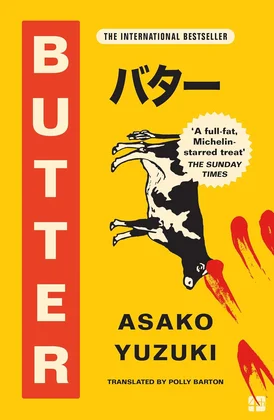
Inspired by The Konkatsu Killer, Butter became a No.1 Sunday Times Bestseller because of its commentary of misogyny and fatphobia. Published in 2025 by Asako Yuzuki, it offers a gluttonous but dark read to those who need it.
A Summary
Butter follows the unsettling yet strangely captivating connection between Manako Kajii, a gourmet cook awaiting trial in Tokyo Detention Centre, and Rika Machida, a young journalist who feels overlooked in her own newsroom. Kajii has been convicted of killing lonely businessmen, supposedly luring them in with her flawless cooking, and the case has gripped the public’s interest. She refuses every interview request until Rika writes to her asking for a recipe, and that small gesture opens a door neither woman expects. Their meetings become less like formal interviews and more like intimate lessons in food, desire and the complicated ways women learn to navigate a world that constantly scrutinises them. Rika, who usually survives on instant meals and late nights, begins to feel something shift within herself as she listens to Kajii talk about flavour, hunger and the body. The more time they spend together, the more Rika starts to question her own life, her own appetites and the quiet ways she has been shaped by misogyny.
Writing Style
Butter is (aside from one chapter) a third person novel with the character we follow being Rika. This novel has fairly long chapters, between 20-40 page long chapters, with hefty descriptions of food, settings and people.
My Thoughts
I picked up this book mostly out of curiosity. I had heard so many great things, but I am usually not a fan of books that revolve around food because long descriptions tend to make me hungry rather than immersed. Butter feels different, though. It uses food to explore fatphobia and the harsh standards placed on women, and Akaso Yuzuki manages to do this with surprising precision. Every character feels layered in a way that is quietly heartbreaking, especially Manako Kajii. Even though the story is told mainly through Rika’s perspective, Kajii is the true centre of the novel. As the story progresses, it becomes clear how Kajii’s distorted worldview developed. Years of being objectified by men and judged by women shaped her into someone who never truly belonged anywhere. There were moments where I felt a little lost, and the slow pacing made it harder to predict where the plot was heading. Even so, the reveal about the rotten turkey in Kajii’s fridge at the time of her arrest tied everything together for me. It felt like a bleak but fitting end to her arc, a moment that confirmed who she was and made it clear that this was never a story about redemption. I also appreciated that Yuzuki drew inspiration from a real killer, Kanae Kijima. This choice adds a strong sense of realism to Kajii’s character and makes her presence in the novel even more unsettling and compelling. This book also left me with a lot to think about, far more than I expected when I first picked it up. Rika’s backstory resonated with me on a personal level, especially the way she quietly questions her own value while trying to make sense of the people around her. Her internal conflict stayed with me after I finished reading, and it added a deeper emotional aspect to the story as a whole. But despite all of that, the food elements did start to feel a little repetitive for me. I wanted more focus on certain character arcs, and I found the food descriptions in the later chapters difficult to get through. The ending also moved at a much slower pace than I would have liked.
Recommendation
This is a book I would recommend for those that have some patience. What it has to say is so important for women to read and hear (and men!) but it’s a heavy read. As someone that has struggled with eating disorders and body dysmorphia, it was an important read, but just make sure you are in the right headspace before you dive in.