Introduction
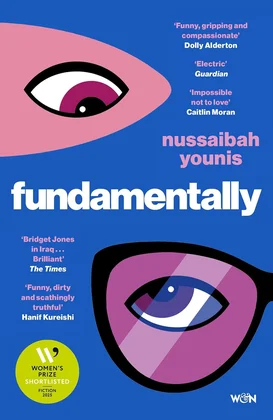
Published in February 2025 as a debut novel by Nussaibah Younis, Fundamentally was shortlisted for the 2025 Women’s Prize for Fiction for it’s hard-hitting discussions and emphasis on an often overshadowed topic.
A Summary
Fundamentally follows Nadia, a young British woman who travels to Iraq after being drawn into the world of ISIS brides, only to confront the harsh reality behind the promises that led her there. The story moves between her life before and after joining the caliphate, showing how radicalisation can happen quietly and personally rather than in dramatic headlines. As Nadia navigates fear, loyalty, and survival, the novel explores friendship, manipulation, trauma, and the political systems that shape who is offered compassion.
Writing Style
The writing style had a lot of emotional force behind it, but you can definitely tell this is Nussaibah Younis’ debut novel. There are moments where her prose feels sharp and grounded, especially when she’s drawing from her expertise and focusing on the women’s inner worlds. At the same time, the structure can feel clunky, with dialogue that doesn’t always flow and scene transitions that land a little awkwardly. It reads like an author with something important to say who is still finding her rhythm in writing fictional stories. Even so, the rawness of her voice gives the story a gritty edge.
What I Loved
Despite all my frustrations with the writing itself, I genuinely loved the core plot. The subject matter is so rarely handled with nuance, and I appreciated how the book tackled something that is often overshadowed by the wider horrors committed by ISIS. Conversations about ISIS usually focus on the organisation as a whole, not on the women who were recruited, manipulated, or coerced into becoming ISIS brides, and the story brings that perspective forward in a way that feels necessary rather than sensational. The relationships between the characters also stood out to me because they felt raw and painfully real. There was a kind of guttural honesty in the way these women interacted with each other, shaped by trauma, survival, and the constant push and pull between loyalty and self preservation. What hit me hardest was the insight into the lived experiences of ISIS brides. It was damning in the best way, not because it excused anything, but because it forced me to confront the layers of exploitation and suffering that are usually flattened into headlines. Knowing that the author is an expert in the deradicalisation of women affiliated with ISIS made everything land with even more weight. You can feel the research and lived expertise in every detail. I also loved how much I learned from this book. It’s the kind of story that leaves you sitting with the uncomfortable truth that so much of these women’s pain is shaped not by justice or accountability but by politics. As a woman, that realization hits like a punch because it reminds you how easily women’s lives can be treated as collateral in systems that were never built to protect them. For all its flaws, the book’s emotional and educational impact stayed with me long after I finished it.
What I Didn’t Love
There were quite a few things that didn’t land for me, and most of them came down to how strangely the book handled its momentum and emotional payoff. The pacing was the first thing that pulled me out of the story because it drifted for long stretches without much happening, only to suddenly sprint toward the ending in a way that felt abrupt rather than intentional. That uneven rhythm made it hard to stay invested, and when the final chapters arrived, they didn’t feel like the natural result of everything that came before. Nadia as a character increased that frustration. I never warmed to her and it often felt like the book wanted me to accept her perspective without question, even when she was acting in ways that were selfish or naive. Her arc with her mother was especially disappointing because the emotional stakes were set up to be huge, yet the resolution felt unearned. Being disowned is a massive moment, and the way they reconciled so easily left me feeling like the story skipped the hard parts. I was also torn about the ending itself. A small part of me liked the idea of where it landed, but a bigger part wished Nadia hadn’t been able to convince Sara. That would have given her choices more weight and forced her to confront the consequences of acting out of self interest. Instead, she gets what she wants and it flattens her growth. On top of that, most of the ending happens off the page which made it impossible to feel connected to any of the big emotional beats. It all wrapped up in a way that felt clunky and distant, like the book was trying to rush toward a conclusion without giving the characters or the themes the space they needed to resonate.
Recommendation
I do recommend this book, and it makes complete sense that it was shortlisted for the Women’s Prize for Fiction 2025. It’s powerful, insightful, and rooted in real expertise, but you need to be in the right headspace before picking it up. This isn’t a cosy or traditionally enjoyable read. Go into it expecting to learn, and to engage with a perspective that’s not explored in fiction enough.